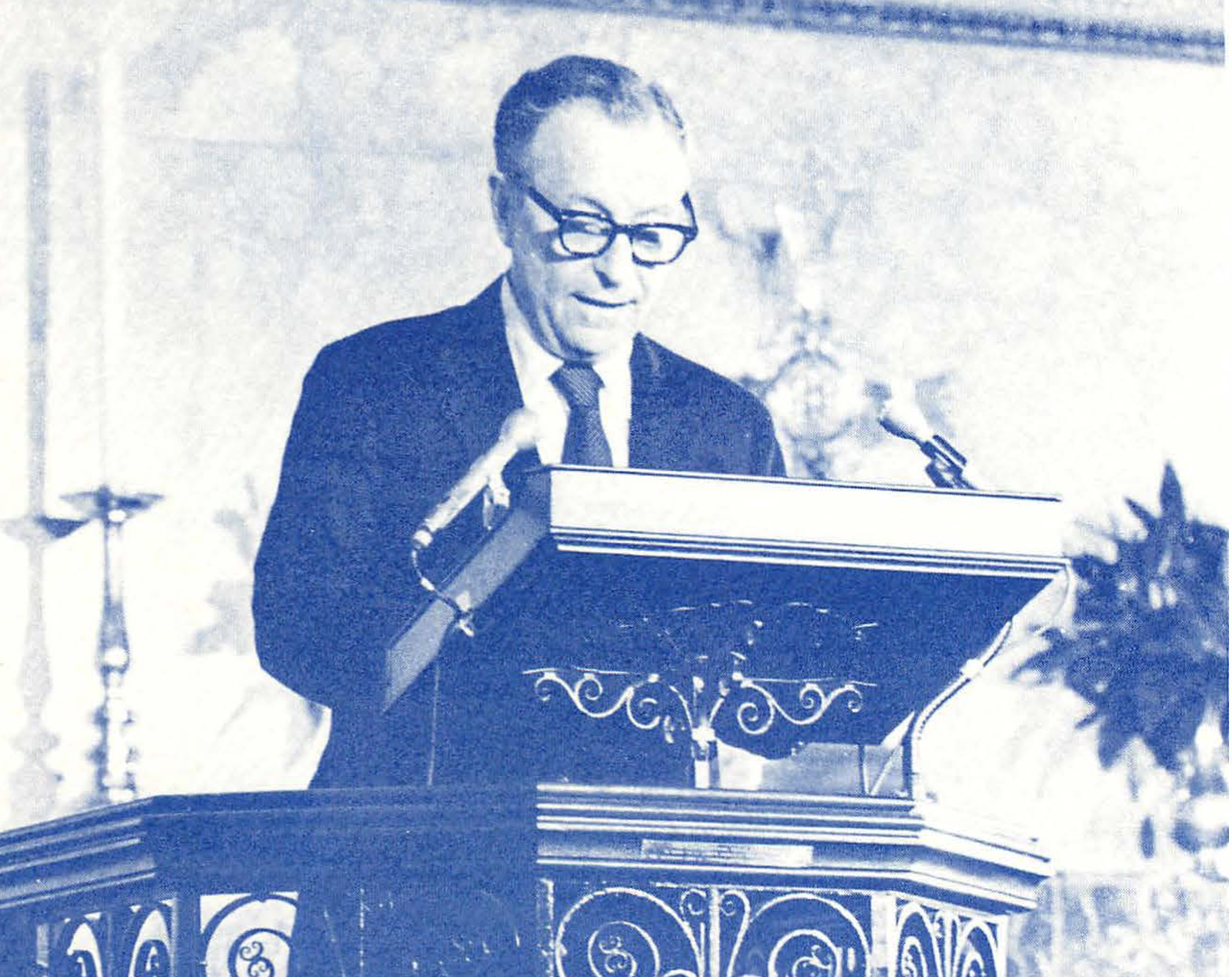
By Irving Kristol
In his 1973 Bicentennial Lecture, Irving Kristol contends that the American Revolution’s success has also made it underappreciated. While all revolutions arise from “tides of passion,” the American Revolution “was able to subordinate these passions to serious and nuanced thinking about fundamental problems of political philosophy.” It unleashed a wave of deliberate constitution-making, embodied in The Federalist, which Kristol calls “the only original work of political theory ever produced by a revolution and composed by successful revolutionaries.”
While he celebrates the revolutionaries’ accomplishment, Kristol is clear-eyed that there is no “unambiguous” success. The deepest flaw of the revolution, he argues, is the tension in “the relationship of the ‘citizen’ to the ‘common man.’” Vacillating between “democratic” and “republican” ideals for their elected representatives, Americans have never developed a consistent theory of representation. Despite this failure, Kristol insists that the founders succeeded in creating a “popular government” that “incorporated both republican and democratic principles, in a complicated and ingenious way.” That government has worked so well that we have stopped asking why, making us the “victims of its success.” The bicentennial, Kristol concludes, must not be merely a celebration but a serious effort to understand what it is that we are celebrating.