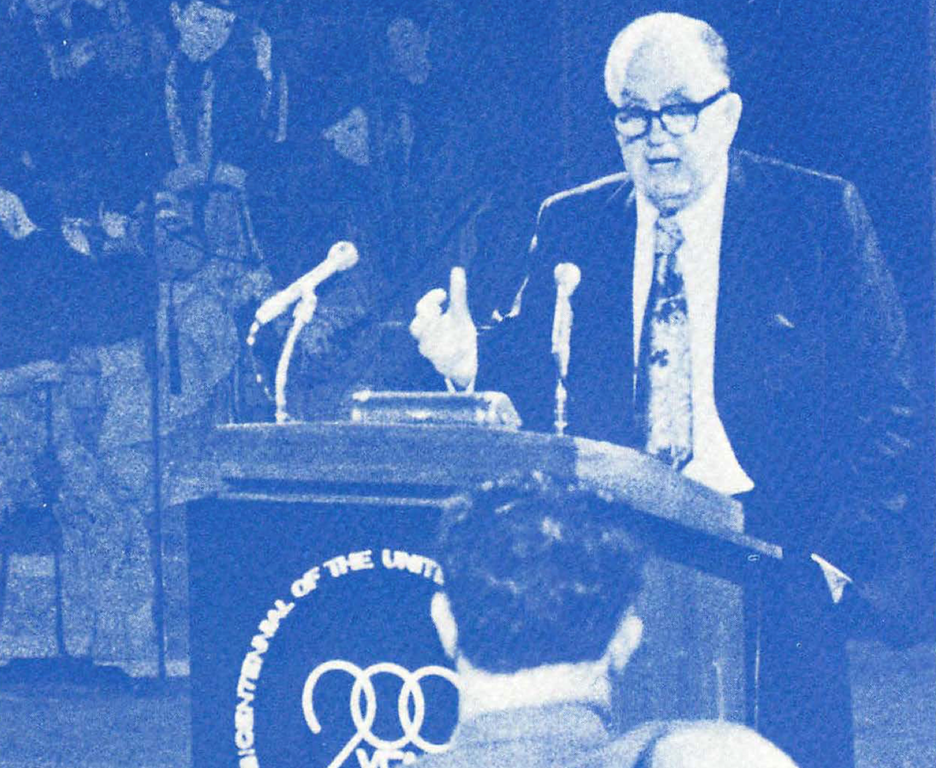
By Charles Burton Marshall
In his 1974 Bicentennial Lecture, international politics scholar Charles Burton Marshall argues that the principles articulated in the Declaration of Independence have been “legitimizing concepts” of American foreign policy since the early republic. What made the Declaration sui generis, he contends, was that it introduced moral and legal justification for a conflict already underway in 1776. Marshall situates the American Revolution within a longer constitutional clash between colony and mother country dating to 1649. The decisive rupture, however, followed the Seven Years’ War, when Parliament asserted supremacy over the colonies through direct taxation and thus marked an end to rule that had been until then merely “declaratory and ritual.”
The Declaration communicated to the world that the revolutionaries were not just fighting over “a mere matter of tax jurisdiction,” but rather for “the prizes of statehood and sovereignty.” The document’s genius, Marshall argues, lay in how it waged “psychological warfare” abroad. By claiming the “moral high ground” it sought both to sap British resolve and attract allies—or at least “a benign tilt” from foreign powers. Without such support, independence would have been unattainable. Marshall concludes by noting that the Declaration’s foreign policy influence has far outlived the founding era.