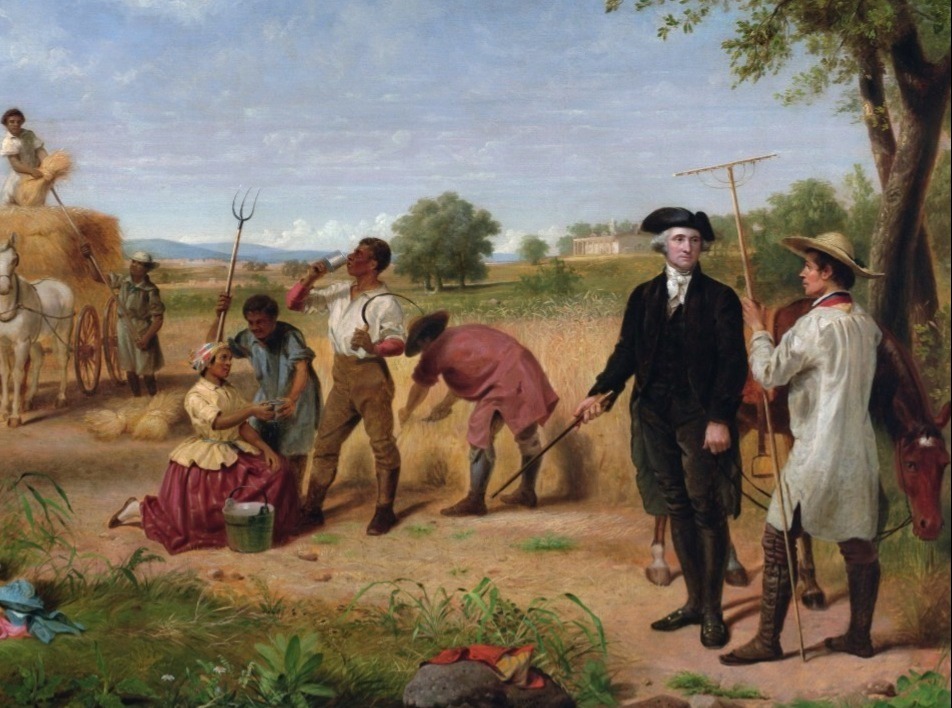
July 4, 2026, marks the 250th anniversary of the Declaration of Independence and, therefore, of the United States of America. Such an anniversary is a time for celebration, and Americans will certainly mark it with great fanfare. But celebrations of our nation’s founding and its history are now always unavoidably accompanied by accusations that the founding generation ignored or promoted the evils of slavery and that the Declaration’s assertions about the truths of human equality and liberty could not have been the honest views of slaveholders.
Our generation is hardly the first to argue that slavery casts a shadow over the claims of the founding. That has been the view of many Americans from the very beginning. Indeed, Thomas Jefferson himself, in his original draft of the Declaration of Independence, included among the colonial grievances against King George III the accusation that the king had abided the violation of the basic rights of “persons of a distant people, who never offended him, captivating and carrying them into slavery in another hemisphere,” and had “determined to keep open a market where men should be bought & sold.”1 But the Second Continental Congress struck those lines from the final document.
In a sense, this back-and-forth contained the seeds of the moral quandary that still confronts us over slavery and the founding. Jefferson was himself a slave owner and so a participant in the very market he denounced. How could his denunciations be squared with his actions? And what can we make of the congress’s refusal to take up the question of slavery one way or another?
Such questions remained unanswered, and they festered and grew in the decades that followed as slavery metastasized into an intensely malignant sickness in the American body politic. The horrid practice became entrenched in the South, and the hypocrisy of its persistence in a nation that never ceased to declare itself a cradle of liberty came to seem increasingly untenable. For some, this was a reason to dismiss the Declaration and its claims. For others, those very claims were a reason to reject slavery and seek its end in America. Abraham Lincoln understood that the nation faced a choice between these two alternatives, and he framed the Civil War in just those terms, putting the Declaration at the very core of the American story.
Lincoln acknowledged that some of the signers of the Declaration, and indeed its lead author, did not live up to its claims about human equality. But those claims have had a power of their own, which those signers and authors intended. Those founders, Lincoln said,
meant to set up a standard maxim for free society, which should be familiar to all, and revered by all; constantly looked to, constantly labored for, and even though never perfectly attained, constantly approximated, and thereby constantly spreading and deepening its influence, and augmenting the happiness and value of life to all people of all colors everywhere.2
This remains an unequaled description of the peculiar power of the Declaration of Independence, from its day right through to ours.
But the argument that the very fact of slavery made hypocrites of the founders and proved that they never meant what they said in declaring independence has remained with us nonetheless. It is an argument made anew in every generation and that must be taken seriously and contended with. The questions it raises challenge us to sharpen our understanding of the character of our country and speak as much to its future as to its past.
Better understanding the character of our society this way is precisely the purpose of the American Enterprise Institute’s “We Hold These Truths: America at 250” initiative, an ambitious celebration of the founding of which this volume forms a part. Over several years leading up to the anniversary of the Declaration of Independence, we are inviting scholars both within AEI and from other institutions to take up a series of themes important to understanding the American Revolution. These scholars represent a variety of fields and viewpoints, so they approach each of these themes from various angles. The papers they produce are being published in a series of edited volumes intended to help Americans think more deeply and clearly about our nation’s origins, character, and prospects.
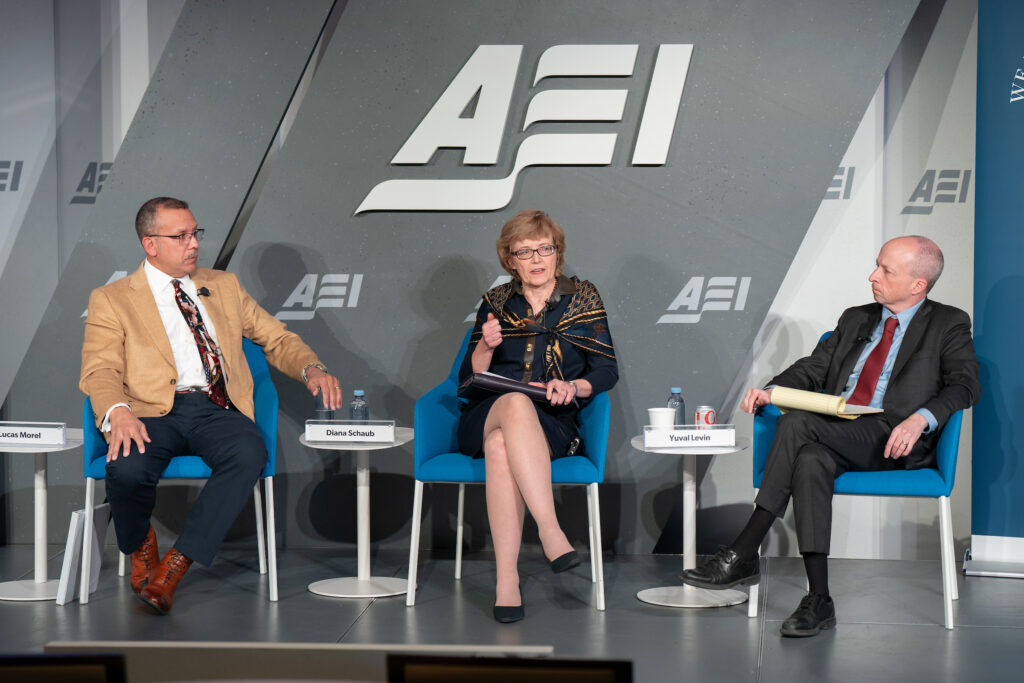
Slavery, Equality, and the American Revolution is the fifth of those books. Its chapters began as papers presented at an AEI conference held in Washington, DC, on February 10, 2025. Other volumes in the series consider the American Revolution in relation to other themes, such as democracy, religion, natural rights, and the Constitution. In each case, our goal is to help reintroduce readers to their nation’s history, thereby enabling them to maturely appreciate the reasons for celebrating the extraordinary milestone of its 250th anniversary.
In the chapters that follow, five eminent scholars of history, philosophy, law, and government consider how we ought to understand slavery’s place in the American story and what we should make of the tension between the truths asserted in the Declaration and the practice of that wicked institution in the nation that declared itself committed to those truths.
Randy E. Barnett argues that the authors of both the Declaration and the Constitution meant what they said and that what they said was that all men are created equal and therefore that slavery was unjust.
Kurt T. Lash shows that federalism and freedom have been intertwined ideals from the beginning and that freedom of action for the states in the early republic was not a tool for the defenders of slavery but an essential instrument for the cause of abolition.
Lucas E. Morel traces Abraham Lincoln’s case for the centrality of the Declaration in any conception of the American character and therefore for the consistency of an antislavery defense of the founding.
Justin Driver considers Frederick Douglass’s critiques of the founding and illuminates how generations of Americans have drawn on the Declaration to address the deepest moral challenges to the legitimacy of the American republic.
And Diana Schaub follows the evolution of Douglass’s own conception of the founding, which traces a path that she suggests today’s skeptical students would be wise to consider and follow.
The scope of these arguments helps show just how serious a moral challenge the practice of slavery posed to the American founding and just how deep are the moral roots of the founders’ core commitments. Two hundred fifty years after the Declaration set up its standard maxim for a free society, its influence still spreads and deepens.